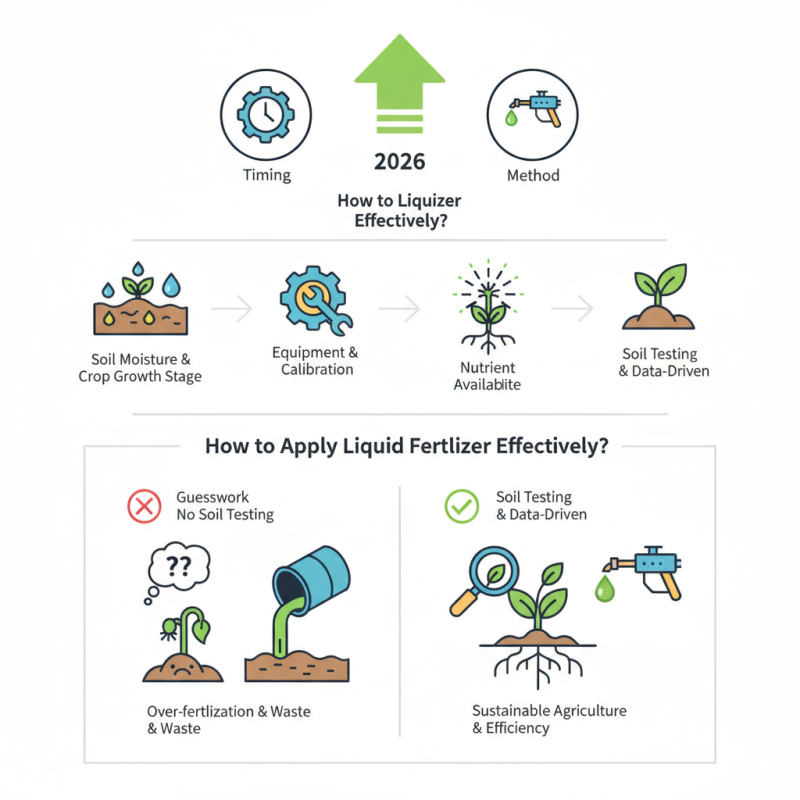
In 2026, the effective application of liquid fertilizer remains a crucial topic for agricultural success. "What is the best way to apply liquid fertilizer?" is a question many farmers seek to answer. According to Dr. Emily Carter, a leading agronomist at the Agriculture Institute, "Timing and method are everything when applying liquid fertilizers." Her expertise underscores the importance of precision in fertilization techniques.
Farmers often overlook critical factors, such as soil moisture and crop growth stage, before application. Proper timing ensures that nutrients are available when plants need them most. Additionally, using the right equipment can make a significant difference in application efficiency. Many struggle with calibration, leading to uneven nutrient distribution.
Reflecting on common practices, some might resort to guesswork rather than using soil testing. This approach can result in over-fertilization, harming the environment and wasting resources. As we navigate these challenges, understanding the best practices for liquid fertilizer application is essential for sustainable agriculture.
Liquid fertilizers are an effective way to deliver nutrients directly to plants. Understanding their types and nutrient composition is essential for successful application. There are various types of liquid fertilizers on the market, including balanced, nitrogen-rich, and potassium-heavy options. Each type serves different purposes,
responding to specific plant needs.
Balanced liquid fertilizers contain equal parts of macronutrients. They ensure that plants receive adequate nitrogen, phosphorus, and potassium for growth. Nitrogen-rich formulas are especially beneficial during the vegetative stage. They promote lush green foliage and overall plant vigor. Additionally, potassium-heavy fertilizers can enhance flowering and fruiting, fostering better yields.
However, effective use of liquid fertilizers requires careful consideration and observation. Overapplication can lead to nutrient burn, damaging delicate roots. It’s vital to monitor plant response after application. Reflecting on the effects can aid in adjusting future applications for optimal growth. Striking a balance in nutrient delivery is key to successful gardening. Always be mindful of the specific needs of your plants, as those can vary widely.
Optimal timing is crucial when applying liquid fertilizer during the growing season. Research shows that applying fertilizer too early or too late can hinder plant growth. According to the Agricultural Research Service, plants absorb nutrients effectively when they are actively growing. For most crops, the ideal window is from late spring to early summer, when soil temperatures rise above 60°F (15°C).
During this peak growing period, plants are in their vegetative stage, maximizing nutrient uptake. A study published in the Journal of Plant Nutrition found that liquid fertilizers applied during this time can increase yields by 15-25%. Observing weather patterns is also important. Excessive rainfall can wash away nutrients or hinder proper soil absorption. Adjusting your application based on forecasted rain can help optimize results.
Many growers face challenges in timing applications correctly. It can be tempting to fertilize too early, hoping to give plants a boost. However, this can lead to nutrient leaching, wasting resources. Understanding your specific crop requirements and local climate conditions can improve efficiency. Striking the right balance between application timing and environmental factors remains a constant learning opportunity for many in the field.
When it comes to applying liquid fertilizer, the method chosen can significantly impact plant growth. Two prominent techniques are foliar application and soil incorporation. Each has its unique advantages and ideal scenarios. According to a study by the International Fertilizer Association, foliar feeding can increase nutrient uptake efficiency by up to 50% compared to soil application, especially during peak growth periods.
Foliar application involves spraying fertilizer directly onto plant leaves. This method allows for rapid absorption through the leaf surface. It is particularly effective for micronutrients that plants need in small quantities. However, the timing of application is crucial—early mornings or late afternoons are ideal to prevent evaporation. In contrast, soil incorporation enhances nutrient availability for root uptake over time, which is beneficial for broader nutrient needs.
Tips: For foliar spraying, ensure droplets are fine and evenly distributed. Avoid application during windy conditions to minimize drift. For soil methods, consider incorporating fertilizers at planting to optimize root access.
While these techniques have proven effective, challenges arise. Leaf burn may occur if fertilizers are too concentrated. Soil amendments can lead to nutrient lock-up if the soil pH is not monitored. Regular soil tests are beneficial for adjusting fertilizer strategies.
Calculating the right dosage of liquid fertilizer is crucial for effective application. Farmers and gardeners often struggle with getting it just right. Too little can lead to nutrient deficiency, while too much can harm plants or contaminate water sources. Understanding the specific needs of your plants is essential.
Start by analyzing soil health. A soil test helps determine nutrient levels and pH balance. Each plant species has different requirements, so tailor your liquid fertilizer accordingly. Use industry guidelines as a reference. For example, general recommendations often suggest 1-2 gallons of diluted fertilizer per 1,000 square feet of garden. However, this may vary based on plant type and growth stage.
Applying liquid fertilizer can be tricky. Weather conditions, soil moisture, and plant life cycle all play a role. Over-application might lead to nutrient runoff, which negatively impacts the environment. Adjust your dosage based on the weather and growth progress. Experimentation is sometimes necessary to find the optimal balance. Always be willing to reassess and modify your approach based on results.
This chart illustrates the recommended dosage of liquid fertilizer for different types of crops to achieve optimal growth, measured in liters per hectare. Adjusting the dosage based on crop type and growth phase can enhance nutrient absorption and maximize yield.
Weather conditions significantly influence the effectiveness and absorption of liquid fertilizers. High temperatures can increase evaporation rates, leading to nutrient loss. Rain can wash away applied fertilizers before plants can absorb them. To achieve optimal results, consider the weather forecast before fertilizing.
Using liquid fertilizers during mild, overcast days can enhance absorption. Morning applications allow roots to uptake nutrients efficiently. Apply when plants are not stressed by heat or drought. Make adjustments based on local climate patterns. For example, coastal regions may have different challenges than arid areas.
Tips for effective application: balance nutrient levels according to plant needs. Conduct soil tests to determine specific deficiencies. Monitor precipitation closely. If heavy rain is expected, postpone fertilization to prevent runoff. Adjusting your strategy according to environmental factors can lead to healthier plants and better yields.
| Weather Condition | Liquid Fertilizer Type | Application Rate (L/ha) | Uptake Efficiency (%) | Optimal Temperature (°C) |
|---|---|---|---|---|
| Sunny | NPK 20-20-20 | 150 | 85 | 20-25 |
| Rainy | Liquid Seaweed | 100 | 70 | 15-20 |
| Overcast | Organic Fertilizer | 200 | 80 | 18-22 |
| Windy | Liquid Phosphorus | 120 | 75 | 16-20 |
| Cool | Potassium Nitrate | 140 | 78 | 10-15 |
: The two primary methods are foliar application and soil incorporation. Each has unique advantages.
Foliar feeding can enhance nutrient uptake efficiency by up to 50% compared to soil methods during growth phases.
Early mornings or late afternoons are ideal for foliar application to minimize evaporation loss.
If fertilizers are too concentrated, leaf burn may occur. It's crucial to monitor concentration levels.
Soil incorporation enhances root access to nutrients over time. It supports broader nutrient needs for plants.
Incorrect dosage can lead to nutrient deficiency or harm plants, including contamination risks to water sources.
High temperatures can increase evaporation, while rain may wash away fertilizers before nutrients are absorbed by plants.
Postpone fertilization to prevent nutrient runoff if heavy rain is in the forecast.
Analyzing soil health helps tailor fertilizer to specific plant needs. Regular soil tests are necessary for adjustments.
Yes, experimentation helps find the best balance for nutrient application based on varying conditions and results.
When considering the question, "What is the best way to apply liquid fertilizer?", it is essential to understand liquid fertilizers' various types and their nutrient compositions. Knowing the optimal timing for application during the growing season can significantly enhance plant growth and health. Effective techniques, such as foliar application versus soil incorporation, further diversify the methods available for farmers and gardeners.
In addition, calculating the right dosage based on industry guidelines ensures that plants receive the appropriate amount of nutrients without the risk of over-fertilization. Lastly, the impact of weather conditions on the efficacy and uptake of liquid fertilizers cannot be overlooked, as these factors play a crucial role in the overall success of fertilization strategies. By combining these elements, one can achieve a more effective application of liquid fertilizer for healthier plants and improved yields.

Treo Nutrition