How to transition cattle to high-protein diets? The answer begins with biology, not a larger protein number. The National Academies’ Nutrient Requirements of Beef Cattle, Eighth Revised Edition, explains that cattle need usable protein, energy, and rumen-degradable protein in balance. The 2021 NASEM Dairy Cattle report also separates crude protein from metabolizable protein. That distinction matters inside a working rumen.
Industry guidance supports a controlled change. AHDB’s Feed into Milk technical work emphasizes diet consistency, dry-matter intake, and effective fiber when feeding high-producing cattle. A sudden increase in soybean meal, canola meal, or other concentrates may reduce rumination and loosen manure. It can also waste expensive nitrogen. The USDA’s feed-market reports show why cost control matters when protein ingredients fluctuate sharply.
Dr. Mary Beth de Ondarza, a recognized dairy nutrition consultant, offers a practical warning: “Protein must be matched to the cow’s energy supply.” Her point is simple. More protein cannot repair an energy shortage. Transition plans should usually stretch across seven to fourteen days, with small daily increases. Monitor feed refusals, cud chewing, manure texture, milk urea nitrogen, and body condition. A handful of ration on a dark rubber mat can reveal sorting more clearly than a spreadsheet.
Still, no universal schedule fits every herd. Forage quality, breed, stage of lactation, weather, and bunk space change the outcome. That is the uncomfortable part. A ration can look correct on paper and fail at the feed bunk. This guide examines safer adjustments, practical measurements, and the mistakes that deserve another look.
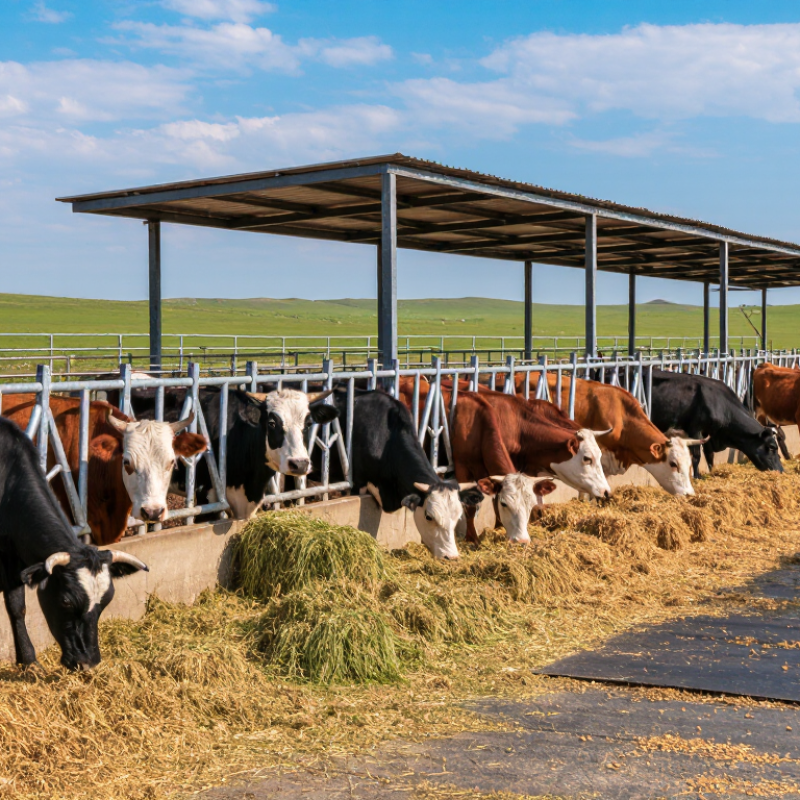
Assessing Cattle Health, Nutritional Needs, and Protein Requirements
How to Transition Cattle to High Protein Diets?
Assessing Cattle Health, Nutritional Needs, and Protein Requirements
Before changing a ration, assess each group’s health, body condition, age, and production stage. Growing calves and lactating cows may need different protein levels. A forage test can reveal whether pasture or hay already supplies enough protein. Check feed quality, too; dusty or spoiled forage can reduce intake. High protein is not automatically better.
Introduce the new ration gradually over several days, while keeping familiar forage available. Sudden changes can disrupt rumen function and reduce appetite. Watch cattle eat, drink, and ruminate, and note changes in manure consistency or body condition. Small changes matter. It is easy to blame the ration too quickly; illness, weather, and water access can also affect intake. Work with a qualified livestock nutritionist or veterinarian to set requirements for the herd.
Tips: Keep feed and water clean and accessible. Record daily intake and observe animals at the same time each day. If cattle stop eating, develop persistent loose manure, or appear unwell, pause the transition and seek professional advice.
Selecting Suitable High-Protein Feed Sources and Rations
Selecting a high-protein feed starts with the cattle, not the ingredient label. Calves, replacement heifers, and lactating cows have different protein needs. Soybean meal, canola meal, alfalfa, and some distillers grains can contribute protein. Their nutrient levels and digestibility vary. Small details matter.
Use forage and feed test results to balance the ration on a dry-matter basis. Crude protein alone does not show how much protein rumen microbes can use. A nutritionist can help match rumen-degradable and bypass protein with the cattle’s energy supply. Check fiber, minerals, and water access too. For example, a ration rich in distillers grains may need adjustments to other nutrients. Feed analysis is more dependable than guessing from appearance.
Introduce the selected ration gradually, often over 10 to 14 days, while keeping feed available consistently. Watch bunk intake, manure, and body condition each day. A sudden change can reduce intake or upset rumen function. No ration is perfect on paper. Recheck it when forage changes, and be willing to revise an ingredient choice if cattle respond poorly.
How to Transition Cattle to High Protein Diets? - Selecting Suitable High-Protein Feed Sources and Rations
Crude protein (CP) values below are approximate percentages of feed dry matter (DM). Actual values vary by crop, processing, and supplier; use a laboratory feed analysis when formulating a ration.
| Feed source |
Typical CP (% of DM) |
Potential role in the ration |
Selection and feeding considerations |
| Soybean meal |
44–49% |
Concentrated protein supplement for beef or dairy rations. |
Check the analysis and balance the full ration for energy, fiber, and minerals. Introduce gradually, especially when cattle are not accustomed to concentrate feeds. |
| Canola meal |
36–42% |
Protein supplement that can replace part of another oilseed meal. |
CP and fiber vary with processing. Compare nutrient analyses rather than substituting feed pound-for-pound. |
| Distillers grains |
26–34% |
Provides protein and energy; may be available wet or dry. |
Composition, moisture, sulfur, and fat can vary. Account for moisture in wet products and monitor total dietary sulfur and fat where relevant. |
| Alfalfa hay |
15–22% |
Forage source of protein and effective fiber. |
Quality depends on maturity and storage. Test hay for CP, fiber, and minerals; maintain adequate forage in the overall diet. |
| Field peas |
22–26% |
Protein- and energy-containing grain ingredient. |
Particle size and processing affect digestion. Introduce in steps and balance the ration for rapidly fermentable carbohydrate. |
| Cottonseed meal |
36–45% |
Protein supplement used in some beef and dairy rations. |
Values depend on processing. Consider the ration’s total fat and, where cottonseed products are used, follow professional guidance on gossypol exposure. |
Illustrative 14-Day Transition Schedule
| Period |
Share of the planned amount of the new high-protein ingredient |
Management approach |
| Days 1–3 |
About 25% |
Start with a small amount mixed evenly into the familiar ration. Keep the established forage and feeding routine consistent. |
| Days 4–6 |
About 50% |
Increase only if cattle are eating normally and manure, rumination, and general behavior remain typical. |
| Days 7–10 |
About 75% |
Continue gradual increases. Avoid abrupt changes to forage, grain, or feeding frequency at the same time. |
| Days 11–14 |
Up to 100% of the formulated amount |
Reach the target only if cattle are adapting well and the complete ration has been checked for nutrient balance. |
Introducing Higher Protein Levels Gradually
When raising protein, change the ration in measured steps rather than replacing the old feed overnight. Oklahoma State University Extension uses forage below about 7% crude protein on a dry-matter basis as a practical warning that supplementation may be needed. It is a screening point, not a target for every animal. The National Academies’ 2016 beef-cattle report bases protein needs on factors such as body weight, growth, and production stage. A growing steer and a mature cow should not automatically receive the same protein level.
A practical starting point
Start by testing the forage and weighing the supplement. Increase the new protein source in small increments over several days, keeping the feeding time and access to bunks consistent.
Watch closely. Note refusals, sorting, loose manure, and changes in daily intake; these signs can reveal a poor transition, though they do not diagnose its cause. If intake drops, pause the increase and review the ration with a livestock nutrition professional. Protein from different feeds is not interchangeable, and a higher crude-protein number alone does not prove the diet meets metabolizable-protein needs.
Keep changes measurable: I would also avoid changing several ingredients at once. That makes the cause harder to spot when cattle respond unevenly.
Monitoring Intake, Digestion, Growth, and Animal Health
How to Transition Cattle to High Protein Diets?
A high-protein ration can support lean growth, but cattle need time to adapt. Change ingredients gradually over 10 to 14 days. NASEM’s Nutrient Requirements of Beef Cattle, Eighth Revised Edition, stresses that protein needs depend on body weight, maturity, and expected daily gain. Crude protein alone does not show the full picture. Monitor dry matter intake, chewing activity, manure texture, and sorting behavior each day. Loose, bubbly manure may signal excessive degradable protein or poor rumen balance.
Track body weight or heart-girth estimates weekly. A stalled gain deserves investigation before adding more protein. Check water access, bunk space, forage quality, and mineral intake. USDA cattle health guidance identifies clean water as essential, while practical recommendations often range from 1 to 2 gallons per 100 pounds of body weight daily. Heat can raise demand sharply. Watch the manure. Small changes can appear before visible illness.
Tips: Keep feeding times consistent, and record every ration change. Use forage analysis instead of guessing protein content. Ask a qualified nutritionist to review metabolizable protein and energy together. Observe breathing, posture, appetite, and cud chewing. A glossy coat is encouraging, but it is not proof of efficient digestion. I have seen cattle grow unevenly despite impressive intake records. That reminder matters: growth data should be checked against health observations, not treated as the only answer. NASEM and Beef Quality Assurance materials both support careful records, gradual management, and prompt correction when cattle respond poorly.
Adjusting the Diet for Performance and Long-Term Stability
How to Transition Cattle to High Protein Diets?
Adjusting the Diet for Performance and Long-Term Stability
A higher-protein ration can support growth or milk production, but protein alone does not guarantee better performance. Match the ration to the cattle’s age, production stage, body condition, forage quality, and energy supply. Have a qualified livestock nutritionist review feed analysis before making major changes.
Go slowly. Introduce the new feed in measured steps over several days or longer, depending on the animals and ration. Keep feeding times consistent, and avoid changing several ingredients at once. At the bunk, check for refusals, uneven intake, loose manure, or animals hanging back. These details can reveal trouble before performance drops.
Water access matters, especially when diets change and animals consume more dry matter. Check troughs daily, and make sure smaller or timid cattle can reach them. Monitor weight, body condition, milk output, and manure; compare trends rather than reacting to one unusual day. Excess protein may raise feed costs and nitrogen excretion without improving results. This part is easy to overlook. I would also question any transition plan that relies on a fixed schedule without considering forage changes or weather. Adjust carefully, and seek professional advice if intake or health shifts persist.
How to Transition Cattle to a Higher-Protein Diet
This illustrative example increases dietary crude protein gradually over four weeks, from 12% to 14.5% of dry matter. Actual protein requirements vary with cattle class, body weight, production goals, forage quality, and intake. Test the forage and have a qualified nutritionist balance the complete ration; these values are not a universal feeding recommendation.
FAQS
Calves, replacement heifers, and lactating cows have different needs. Match the ration to age, production stage, body condition, and forage quality.
Soybean meal, canola meal, alfalfa, and some distillers grains can contribute protein. Their digestibility and nutrient levels vary.
Crude protein does not show how much protein rumen microbes can use. Feed tests and nutrition advice can help match protein with energy.
Introduce changes gradually, often over 10 to 14 days. Keep feeding times consistent. Avoid changing several ingredients at once.
Check bunk intake, manure texture, chewing, and sorting each day. Loose, bubbly manure may signal a rumen imbalance.
Track weight or heart-girth estimates weekly, and compare trends. A stalled gain needs investigation; more protein may not be the answer.
Very important. Check troughs daily, especially during hot weather, and make sure timid cattle can reach them.
Review it when forage changes or animals show persistent intake or health problems. A glossy coat alone proves little, and even good records can miss uneven growth.
Conclusion
How to transition cattle to high-protein diets? Begin by assessing each animal’s health, age, body condition, production stage, and existing nutritional needs. Protein requirements vary according to growth, pregnancy, lactation, and overall performance, so the diet should be planned according to the herd’s specific goals. Select suitable high-protein feed sources and create a balanced ration that also supplies adequate energy, fiber, minerals, and clean water.
Higher protein levels should be introduced gradually rather than changed abruptly. Increase the new feed in controlled steps while maintaining enough effective fiber to support healthy rumen function. During the transition, monitor feed intake, digestion, manure consistency, body condition, growth, milk production, and general behavior. If cattle show reduced appetite, digestive discomfort, or unexpected changes in performance, adjust the ration promptly. Regular evaluation helps maintain animal health, improve feed efficiency, and establish a stable feeding program that supports consistent results over the long term.

 Treo Nutrition